Esxi Install Driver
Savingprivateryan wrote: 'VMWare vSphere 2015 Beta' This will be how it is known to VMWare Workstation, it will be a default name, future updates of Workstation may change this but as of the release you have, ESXi 6 would have been a beta. Create an ESXi installation ISO with custom drivers in 9 easy steps! Video Posted on September 13, 2019 Updated on September 21, 2019. One of the challenges in running a VMware based home lab is the ability to work with old / inexpensive hardware but run latest software. For a vSGA configuration, upload the VMware vSphere ESXi Driver for vSGA to the ESXi 6.0 U1 host. Power off or suspend all virtual machines on the ESXi host. Connect to the ESXi host using SSH. Stop the xorg service. Install the NVIDIA VIB. Reboot or update the ESXi host. For an installed ESXi. To Download the image: 1. Click Download now, to download the file. When the File Download window appears, click Save this program to disk and click OK. The Save In window appears. From the Save In drop-down menu, click to select Desktop and then click Save. The file will download to your desktop. If a Download Complete window appears, click Close. Install the NIC Driver on ESXi Obtain a list of network interfaces on the ESXi host. Determine the driver version for a particular interface. You can use either ethtool or esxcli to determine the currently-installed driver version. The following example uses vNIC4 and returns driver version 3.21.6.
One of the previous blog posts explained Hyper-V nested virtualization as well as the installation of a virtual Hyper-V server on a VM that runs on a physical Hyper-V server. Today’s blog post covers the installation of an ESXi server on a Hyper-V VM, and can be useful for testing and educational purposes; for instance, if you have Hyper-V hosts but you are thinking about deploying ESXi hosts in your environment. ESXi is VMware’s hypervisor, while Hyper-V is Microsoft’s hypervisor. Using an ESXi server installed on a Hyper-V VM in a production environment is not recommended.
Requirements
The following requirements must be met in order to install ESXi on a Hyper-V VM:
- Compatible hardware. Your processor must support hardware virtualization features. In case of using Hyper-V, you must have the Intel CPU (central processing unit) with Intel VT-x (Virtualization Technology) support. Intel VT-x must be enabled in BIOS or UEFI (Unified Extensible Firmware Interface) of your computer.
- Windows 10 (Build 10565 or later) or Windows Server 2016 with Hyper-V. Hyper-V VM configuration version must be 8.0 or later.
- PowerCLI 6.3 or later. PowerCLI is a tool with a command line interface (CLI) provided by VMware, which includes a set of cmdlets that can be executed in PowerShell as well as used for scripting and automation.
- ESXi installation image. The installation image must be ESXi-6.0.0-20170604001 Build 5572656 or older. Newer builds and versions of ESXi may not work due to blocking network drivers for a Hyper-V legacy virtual network adapter. Download the appropriate offline bundle in a ZIP archive. ESXi600-201706001.zip is used in this blog post.
Preparing Your Environment
Prepare your environment to make ESXi installation on a Hyper-V VM possible. The main steps include:
- Enabling a Hyper-V role. Go to Control Panel > Programs and Features > Turn Windows features on or off. Check the box near Hyper-V, click OK, and wait until the installation process finishes before restarting the physical machine. You can also enable a Hyper-V role by using PowerShell.
- Installing PowerCLI. You can download PowerCLI from VMware website. If you have previously installed any PowerCLI version that is older than 6.3, you should uninstall it. The PowerCLI installation process is rather straightforward – simply run the installer and follow the wizard steps. PowerCLI is used for integrating network drivers into the ESXi installation image in this case.
- Downloading tulip drivers. Tulip drivers, also known as net-tulip drivers, are drivers for the legacy virtual network adapter of a Hyper-V VM. They allow you to use network for ESXi under Hyper-V. By default, ESXi doesn’t recognize the network adapter of a Hyper-V virtual machine. You can download net-tulip drivers here.
Integration of Tulip Drivers to the ESXi Installation Image
Let’s take a closer look at the integration of net-tulip drivers to the ESXi installation image step by step. Without integration, the installation process will fail as ESXi cannot recognize a Hyper-V legacy network adapter without the appropriate drivers. For more convenience copy all necessary files to the same directory, e.g., C:VirtualESXi-images.
Make sure you have installed Hyper-V and PowerCLI before continuing. Run PowerCLI and type the following command to change the current directory to the directory with the prepared files (in this case C:VirtualESXi-images).
Add offline depot ZIP files to the current PowerCLI session. The metadata is imported from specified depots and can be used for creating new image profiles that can be used for generating new ISO installation images with Image Builder.
You need to know the name of the standard image profile that will be used in the next step. Retrieve the name by using the following command:
Clone the standard profile to a new image profile (in this example the new profile’s name is ESXi-NAKIVO).
Add custom packages with tulip network drivers to the new profile that was created in the previous step.
The acceptance level of a host image profile is used to determine which vSphere installation bundles (VIB files) are accepted for installation. By default, the AcceptanceLevel of a newly created profile is set to PartnerSupported. Custom packages with tulip network drivers have a CommunitySupported acceptance level that differs from the acceptance level of your new profile. This situation causes an error if you try to create an ISO image by using these settings. In order to prevent this, set the acceptance level of your new image profile to CommunitySupported. Type the following command to do this:
Now you are ready to create the ESXi installation ISO file that includes net-tulip drivers. Run the following command to create the ISO image:
The esxi60_custom.iso file is created in the specified directory.
The Alternative Method to Integrate the Drivers
Manual integration of network drivers was shown above; however, there is another way to integrate network drivers into the ESXi installation image. Let’s take a look at the alternative method to integrate the drivers into the ESXi image by using a free ESXi-Customizer script. You will need a free ESXi-Customizer script for PowerShell (ESXi-Customizer-PS.ps1) that can be downloaded here.
Copy the script to the directory that was used to store other installation files (in this example it's C:VirtualESXi-images). Open PowerShell, go to the directory by typing:
If you ran ESXi-Customizer-PS-v2.6.0.ps1 now, an error would be displayed. Type the following command to fix this issue:
Run ESXi-Customizer script with the following arguments:
Select base image profile. Your image profile version must be ESXi-6.0.0-20170604001 or older due to compatibility reasons.
In the current example, the image profile 71 is selected (ESXi-6.0.0-20170604001-standard). Wait until ESXi customizer downloads all of the needed components and builds a customized ESXi installation image.
The file ESXi-6.0.0-20170604001-standard-customized.iso is now ready in your directory with the installation files.
Creating and Configuring a Hyper-V VM for ESXi Installation
Now, when the ESXi installation image is ready, you can create a new Hyper-V VM and install ESXi in that VM. Open Hyper-V manager, click Action > New > Virtual Machine.
Enter a virtual machine name (for example, ESXi6-0) and set a location to store the virtual machine (disk C: is used in the current test lab as an example, please use a separate partition without operating system such as D:). Click Next to continue.
Select Generation 1 for your VM in order to make it possible to use a legacy network adapter with the compatible drivers that you have integrated into the ESXi installation image. Read more about Hyper-V Generation 1 and Generation 2 in our blog post. Click Next.
Assign at least 4 GB of memory. Using Dynamic Memory for this virtual machine is not recommended. Click Next.
Configure Networking. You can use the default settings because VM networking must be reconfigured after the virtual machine creation. Click Next.
Create a new virtual disk; 30 GB should be enough. If you are going to run multiple VMware VMs on a virtual ESXi host, set a larger size, or you can add another virtual disk later. You can also use the dynamically expanding virtual disk. Check the disk name and location, then click Next.
Select Install an operating system from a bootable CD/DVD-ROM in Installation Options. Use the ISO image file that you have prepared beforehand (esxi60_custom.iso in this example). Click Next.
Check the summary and click Finish to finalize the VM creation.
Once a new Hyper-V virtual machine is created, edit the VM settings. Right-click the name of your VM and select Settings.. in the context menu.
In the left pane of the window in the Hardware section, select Processor and set the number of virtual processors to 2 or more (1 processor is used by default).
Select the network adapter. First, remove the existing network adapter created by default. In order to do this, click the Remove button.
Add a legacy network adapter to the VM. In the left pane of the window in the Hardware section click Add Hardware. In the right pane select Legacy Network Adapter and click Add.
A legacy network adapter has been added and you can see this adapter in the left pane of the window. Select the recently created legacy network adapter and then select the virtual switch for connecting the virtual adapter. In the current example the External virtual switch is used. Click OK to save the settings and finish configuring the VM.
Enabling Nested Virtualization for the Hyper-V VM with ESXi
Nested virtualization is a feature that allows you to run virtual machines inside a virtual machine. In this case a nested VM should run on a Hyper-V VM that has ESXi hypervisor installed. Enable nested virtualization for this VM in PowerShell (enter your VM name instead of ESXi6-0 if you have a different name to your VM).
ESXi Installation on the Hyper-V VM
Now you are ready to install ESXi on a Hyper-V VM. Start your VM (right-click the VM name, select Connect and click the Start button). Press TAB when you see the boot screen with a blue background to modify boot options, and prevent hanging the VM during boot. Type ignoreHeadless=TRUE and press Enter.
The VMware ESXi installer is loading. You can see the loaded modules including the tulip module that is integrated to your installation image.
When the installer has been loaded, you will see a welcome screen. Press Enter to continue.
Press F11 to accept the license agreement and continue.
Select a disk to install ESXi on. There is a 30GB disk attached to the VM in this example. Press Enter to continue.
Enter a root password, confirm the password, and press Enter.
The system warns you that a disk must be repartitioned. Press F11 to begin the ESXi installation.
Wait until the installation process is finished.
When installation is done, a reboot is required. Press Enter to reboot.
Press Shift+O before the boot begins.
Enter ignoreHeadless=TRUE at the end of the string and press Enter (similarly to how you did at the first step after starting the VM). Below you can learn how to set this option permanently.
When ESXi is loaded, you will see a menu on the grey and yellow background. Press F2 to customize the system settings. Enter your root password. Go to troubleshooting options and enable ESXi Shell and SSH. If ESXi Shell is disabled, your ESXi will freeze at the next step.
Press Alt+F1 to enter the ESXi console. Enter the following command and set the boot settings:
The console can be closed by pressing Alt+F2. Now you don’t need to enter ignoreHeadless=TRUE manually each time ESXi boots.
Configuring Network Settings
Check the network settings for making remote management possible. By default, the IP address is obtained via DHCP (Dynamic Host Configuration Protocol). You can select Configure Management Network in the system customization menu to configure a hostname as well as IP addresses.
In the current example the automatic IPv4 configuration is used. If you want to configure IP settings manually for using a static IP address, select IPv4 Configuration and press Enter.
Creating a VM on a Nested ESXi Host
When you have configured ESXi networking, open your browser and connect to your ESXi host via HTTP protocol. You can also access this web page from another computer that is connected to your network if the External Hyper-V virtual switch is used on your Hyper-V host. In this example, the address entered in the address bar of the browser is http://10.10.10.117. After the page is loaded click Open the VMware Host Client.
Enter the root credentials that you entered during ESXi installation to log in.
On the main screen click Create/Register VM to create a new VM.
1. Select creation type. Select Create a new virtual machine and click Next.
2. Select a name and guest OS. Enter your VM name, select the compatibility, guest OS family as well as version. Click Next.
3. Select storage. In the current example only one datastore is available. Click the datastore you want to use for storing the VM files and click Next.
4. Customize your settings. Set the parameters of virtual hardware. There are two options available for CD/DVD drive used by VM: Host device and ESXi datastore. Use the second option and upload the ISO installation image of the operating system to the local datastore on the ESXi host.
In the left pane click the datastore icon, then in the Datastores tab click Datastore browser.
In the datastore browser window click Upload. Select the appropriate ISO file that can be accessed from your machine (that is used for managing ESXi host with a browser) and wait until the file is uploaded.
Now you can go back to CD/DVD drive options, click Browse and select the recently uploaded ISO file on the datastore.
When the ISO installation image is specified and other VM settings are configured click Next to continue.
5. Ready to complete. Check the VM configuration summary and click Finish to create the VM.
Once the VM has been created, you can try to run the VM for guest OS installation. In order to do this, click the VM icon in the left pane of the web interface, right click the VM and in the context menu select Power > Power on.
Note: Be aware that issues may occur because running ESXi on a Hyper-V VM is not officially supported.
Conclusion
Configuring an environment to run an ESXi hypervisor on a Hyper-V VM is a tricky process, and is not officially supported by vendors. However, you can deploy ESXi on a Hyper-V VM for educational and testing purposes. This blog post has explained how to prepare the ESXi 6.0 installation image with the integration of tulip network drivers as well as Hyper-V VM configuration, and configuring a virtual ESXi host on a Hyper-V VM. You can try to install ESXi hypervisor on a Hyper-V VM at your own responsibility. Do not use such solution in a production environment.
Introduction
This document describes how to install device drivers on the Cisco Unified Computing System (UCS) for common operating systems.
Prerequisites
Requirements
Cisco recommends that you have knowledge of these topics:
- Cisco UCS Manager
- Cisco Integrated Management Controller (CIMC)
- Virtual Machine-ware (VMware), Windows Server, or Linux Operating Systems (OS)
Esxi Install Driver Windows 10
Components Used
The information in this document is based on these hardware platforms:
- UCS B Series
- UCS C Series
The information in this document was created from the devices in a specific lab environment. All of the devices used in this document started with a cleared (default) configuration. If your network is live, make sure that you understand the potential impact of any command.
Background Information
Driver Definition
A device driver is software that is the interface between the OS and the hardware. The device driver translates general OS commands into specialized commands for a particular device, which allows the OS to communicate with hardware devices.
Devices that Require a Driver
Here is a list of hardware devices that require device drivers:
- Ethernet Network Interface Card (ENIC)
- Fibre Channel Network Interface Card (FNIC)
- Redundant Array of Indepent Disks (RAID) Controller
- Motherboard Chipset
- Video Card
- Trusted Platform Module (TPM)
Drivers Versus Firmware
Device drivers are different from firmware. Device driver software is installed on the OS, whereas firmware is lower-level code that is installed on hardware devices. Firmware is stored in non-volatile memory, such as ROM, Erasable Programmable ROM (EPROM), or flash memory.
Driver Dependence on Firmware
Device drivers have a strong dependence on the device firmware. Device drivers must be compatible with the firmware level of a hardware device, so that they properly communicate with each other; driver and firmware functionality must match for correct operation to take place.
When Drivers Must be Installed and Updated
Device drivers come pre-installed with operating systems (such as Cisco OEM VMware ESXi images), or they can be manually installed post-OS setup.
Device drivers generally need to be updated after these procedures:
- UCS firmware upgrades
- Major OS upgrades/patches
Driver Versions Required
The UCS Hardware and Software Interoperability matrix outlines the driver versions that are required for a particular OS, device, and firmware combination.
Warning: The driver versions listed on the matrix have been tested and verified by the Cisco Engineering Quality Assurance team, and it is crucial to install the correct driver; otherwise, you might run into unexpected behavior which could lead to network outages.
This example shows that an FNIC driver version of 1.6.0.36 is required for a B200 M4 with a Virtual Interface Card (VIC) 1240 that runs ESXi 6.0 U3, on UCS Release 3.2.2.
Download the Driver Bundle
Complete these steps in order to download the driver bundle:
- In a web browser, navigate to http://www.cisco.com.
- Under Support, click Download Software.
- Click Unified Computing and Servers.
- Choose your server. Cisco UCS drivers are available for both Cisco UCS B-Series Blade servers and Cisco UCS C-Series Rack-Mount.
- Click Unified Computing System (UCS) Drivers.
- Select the bundle you want to download, and click Download Now.
Tip: When you choose which driver bundle to download, it is important to select the driver bundle version that is most similar to the server firmware release. For example, if you run a UCS-B Release 3.2(2b), then VMware driver bundle ucs-bxxx-drivers-vmware.3.2.2.iso is required.
Tip: Most VMware ESXi drivers are downloaded directly from www.vmware.com/download, with a search for the driver version. This is often quicker than if you were to download the entire driver bundle.
Identify Server Hardware
Before you select the correct driver, you must identify what hardware devices are installed on the server. This section describes how to find the devices located on the UCS Manager and in the CIMC.
UCS B Series
This example shows how to find the server inventory in UCS Manager. Server 1/1 has two adapter models installed: the VIC 1240 and 1280.
UCS C Series
This example shows how to find the server hardware devices in the CIMC. The server has a LSI 9266-8i RAID controller installed.
Identify the UCS Firmware Release
Before the correct driver version is selected, the UCS release must be identifed. This section describes how to identify the current UCS release installed on the servers.
UCS B Series
In this example, the UCS B Series runs UCS Release 2.1(1a).
UCS C Series
In this example, the UCS C Series runs UCS Release 1.4(6d).
OS Specifics
This section describes how to check driver versions and how to install drivers on common OSs.
VMware ESXi
Use these commands in order to check the current driver versions and VMware build:
Tip: These commands are executed from the ESXi CLI. Secure Shell (SSH) must be enabled before an SSH session is initated.
| Command | Description | ||||
| vmware -vl | Displays the VMware build and patch level | ||||
| esxcli software profile get | Displays flavor of install ISO | ||||
| esxcfg-scsidevs -a | Lists the hosts HBAs and the associated driver name | ||||
| esxcfg-nics -l | Lists the host vmnics and network interface card (NIC) models | ||||
| ethtool -i vmnicX | Displays the Ethernet driver used by the specified vmnic | ||||
| esxcli network nic get -n vmnicX | Displays the Ethernet driver used by the specified vmnic on ESXi 6.5 | ||||
| vmkload_mod -s fnic | Displays the host bus adapter (HBA) driver version for the Cisco VIC | ||||
| vmkload_mod -s enic | Displays the Ethernet driver version for the Cisco VIC | ||||
| vmkload_mod -s nenic | Displays the Ethernet driver version for the Cisco VIC for ESXi 6.5 and later releases | ||||
| vmkload_mod -s megaraid_sas | Displays the LSI MegaRAID driver version | ||||
| vmkload_mod -s lsi_mr3 | Displays the LSI lsi_mr3 driver version(Native driver on ESXi 6.7) | ||||
| vmkload_mod -s driver_name | Displays the driver version for a specified driver | ||||
Installdriver Table Manager
These examples show that vmnic2 uses a Cisco VIC and a driver version of 1.4.2.15a.
These examples show that the Qlogic Host Bus Adapter (HBA) uses driver qla2xxx Version 901.1k.1-14vmw.
Install the Driver
Complete these steps in order to install the driver:
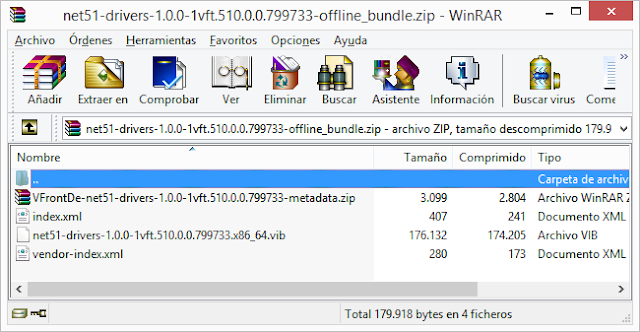
- Extract the contents of the driver zip file, and identify the *.vib file.
- Use the Datastore Browser in order to upload the *.vib file to an ESXi host datastore.
- Enter the host into Maintenance mode.
- Install the driver.

ESXi 5.x/6.x
Use this command in order to install the driver on ESXi Release 5.x/6.x:
Note: If the drivers require a signature verification, run this command with the --no-sig-check switch. Ensure that you use the full path to the file.
ESXi 4.x
Use this command in order to install the driver on ESXi Release 4.x:
Finish the Installation
After you install the driver with one of the previously mentioned commands, exit Maintenance mode and reboot the host. For more information on how to install drivers, reference the Related Information section at the end of this document.
Useful VMware CLI Commands
Here are some other useful VMware commands that you can use when you install a driver:
Check Maintenance Mode Status
Check for Powered-On VMs
Power-Off VMs
Microsoft text to speech windows 10. Download this app from Microsoft Store for Windows 10, Windows 10 Mobile, Windows Phone 8.1, Windows 10 Team (Surface Hub), HoloLens. See screenshots, read the latest customer reviews, and compare ratings for Convert Text to Speech. Aug 06, 2019 How to set up speech-to-text in Windows 10 Type completely hands-free in Windows 10 with speech-to-text support By Tyler Lacoma August 6, 2019 3:00AM PST. 41 rows For customers using Learning Tools for OneNote, Word, or Read Aloud in the Microsoft Edge browser, this article documents ways to download new languages for the Text-to-Speech feature in different versions of Windows. Install a new Text-to-Speech language in Windows 10. On any edition of Windows 10, click Start Settings, and then follow these steps.
Enter Maintenance Mode
Exit Maintenance Mode
Microsoft Windows Server
This section describes how to install a driver on a Microsoft Windows server.
Check Current Driver Version
In order to check the device drivers in Microsoft Windows, use the Device Manager located in the Control Panel.
Check Current Driver Version CLI
For Windows Server Core the Plug-and-Play (PnP) Utility (PNPUtil.exe) is used to check driver versions.
Missing Drivers
Hardware devices with missing drivers are displayed in the Device Manager with a yellow question mark. These devices should be updated with the correct driver in order to prevent unexpected behavior.
Install the Driver
In order to install or update a driver in Microsoft Windows, right-click on the device, and choose Install/Update Driver in order to start the Installation Wizard.
Install the Driver from CLI
The PNPUtil tool can also be used to install drivers from the CLI. The driver ISO bundle can be mounted via the UCS KVM Console Virtual Media.
Useful Windows CLI Commands
Install Esxi Drivers Update Manager
| Command | Description |
| pnputil.exe -e | List all installed 3rd party drivers |
| pnputil.exe -a <INF name> | Install driver |
| pnputil.exe -d <INF name> | Delete driver |
| pnputil.exe -f -d <INF name> | Force delete driver |
Red Hat and SUSE Linux
This section describes how to install and validate a driver on Red Hat Enterprise Linux (RHEL) and SUSE Linux Enterprise Server (SLES).
SUSE Background Information
Starting with SLES 12 SP1, the Cisco eNIC and usNIC drivers are bundled together into a single RPM (vs. being packaged in separate RPMs, as they are for other Linux distributions). Bundling both drivers into a single RPM is required because of how kernel module dependencies are managed in SLES 12 SP1 and later. If you are not using Cisco usNIC functionality (i.e., if you have not provisioned any usNIC devices in UCSM / CIMC), the usNIC driver will effectively be ignored.
The eNIC and usNIC drivers have their own distinct version numbers. If you install the cisco-enic-usnic RPM on SLES 12 SP 1 or later, once those drivers are loaded into the running kernel (e.g., via rebooting), use cat /sys/module/enic/version and cat /sys/module/usnic_verbs/version to view their respective version numbers. The cisco-enic-usnic RPM has its own distinct version number as well. Because it represents the packaging of the eNIC and usNIC drivers, the RPM version number may look similar, but does not reflect the specific version of either driver.
For additional information on the exact driver versions query and review the RPM description section. The query looks similar to the example below:
Verify current driver versions and OS Release
Here is a list of commands used in order to check the current driver version and OS release:
| Command | Description |
| modinfo driver_name | Displays driver version for the specified driver that will be loaded (by default) at next reboot |
| modinfo /path/to/driver_name.ko | Displays driver version for the specified driver kernel object file |
| cat /sys/module/enic/version | Displays the Ethernet driver version currently loaded in the running Linux kernel for the Cisco VIC adapter |
| cat /sys/module/fnic/version | Displays the FC NIC driver version currently loaded in the running Linux kernel for the Cisco VIC adapter |
| cat /sys/module/megaraid_sas/version | Displays the LSI MegaRAID driver version currently loaded in the running Linux kernel |
| lsmod -l | Lists currently-loaded drivers in the kernel |
| cat /etc/redhat-release | Shows the RHEL release (for RHEL 6.x and earlier) |
| cat /etc/SuSE-release | Shows the SUSE release (for SLES 11 SP3 and earlier) |
| cat /etc/os-release | Shows the RHEL release (for RHEL 7.x and later, and SLES 11 SP4 and later) |
| uname -a | Shows kernel related information |
Note: Be aware of the command modinfo [ driver name ]shows the module information about the driver that will be loaded upon next reboot. This is not necessarily the same driver version currently loaded in the running kernel. Review cat/sys/module/DRIVER_NAME/version to validate the driver version loaded in the currently running kernel, and/or use the command modinfo [ /path/to/driver.ko ] to validate the module info for a specific driver kernel object file.
Tip: Refer to the Driver Name Reference Table located in the Appendix for examples of other common driver names.
This example shows that an ENIC driver version of 3.2.210.18-738.12 bundled in the cisco-enic-usnic RPM package 3.2.272.23 is installed on SLES 15 GA.
Install the Driver
Drivers in RHEL and SLES are installed using the Redhat Package Manager (RPM). Use this command in order to install the driver:
Tip: When you install drivers in Linux, ensure that you review the README files associated with the driver if available. You can look at the contents of the RPM to see where its associated README file was installed (e.g., rpm -qp kmod-enic). Some RPM driver packages have dependencies on other modules, and require installation of additional RPM packages. The README files contain full instructions on how to install the driver file.
Appendix
Driver Name Reference Table
This table shows the driver names or prefixes for common drivers.
| Command | Description |
| enic | Cisco VIC Ethernet NIC |
| fnic | Cisco VIC FC NIC |
| qle or qla | Qlogic adapter |
| lpfc | Emulex HBA (light pulse) |
| be2net | Emulex Ethernet NIC |
| igb or ixgbe | Intel NICs |
| bnx | Broadcom adapter |
| megaraid | LSI MegaRAID |
| megasr | Embedded SW RAID |
| nenic | Cisco VIC Ethernet NIC for ESXi 6.5 |